Air purifier for odor control: carbon HEPA picks for cooking, pets and VOCs

HEPA alone does not remove odors. An air purifier for odor control needs an activated carbon layer that adsorbs volatile compounds, not just particulate filtration.

By Pickspry EditorialUpdated 4 picks


The short answer

For odor control in a large room, the WINIX 5520 at $134.99 combines HEPA filtration with activated carbon and PlasmaWave ionization, which breaks down odor-causing volatile compounds at the molecular level across up to 1,882 sq ft. For a smaller room or budget choice, the SwitchBot Air Purifier at $89.99 includes activated carbon in its HEPA stack and covers up to 3,620 sq ft for homes with large open areas.

Product buttons open Amazon search results. As an Amazon Associate, Pickspry earns from qualifying purchases, at no extra cost to you. Learn more

Quick picks

How we chose

Air purifiers for odor control are evaluated by the presence and density of activated carbon filter material, PlasmaWave or other VOC-neutralizing technology, HEPA grade and coverage area. Models with only a thin carbon coating (not a substantial activated carbon layer) are noted. Specs from manufacturer pages. We did not test these units ourselves.

The picks, in detail

4 picks reviewed
01
Best overall air purifier for odors
WINIX WINIX 5520 Air Purifier

WINIX 5520 Air Purifier

Brand: WINIX

Best for

A large living room, kitchen-dining area or open-plan space where cooking odors, pet odors and general VOC accumulation are ongoing concerns, requiring both HEPA particulate capture and molecular odor neutralization.

Skip if

The primary concern is particulate filtration (dust, pollen) rather than odors. The WINIX 5520's PlasmaWave and carbon add odor value at the same price as HEPA-only models. For pure allergen control without odor focus, any True HEPA model at this coverage is adequate.

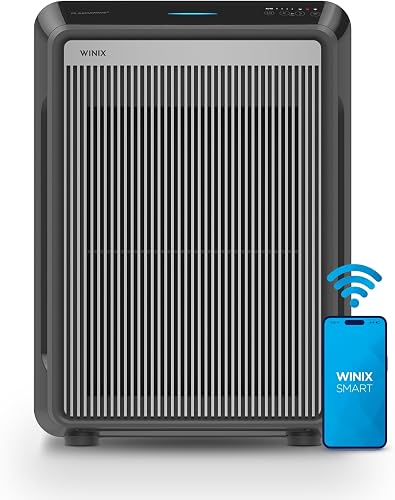
The WINIX 5520 addresses odors through two mechanisms simultaneously: activated carbon adsorbs odor molecules that contact the filter surface, and PlasmaWave generates hydroxyl radicals that neutralize volatile organic compounds in the air before they reach the filter.

PlasmaWave technology is particularly effective for cooking odors and pet VOCs because it acts throughout the room's air volume, not only at the filter surface. Cooking smells from oils and proteins, cat litter ammonia and VOCs from cleaning products are reduced faster than carbon-only approaches.

The Wi-Fi app provides auto mode, which adjusts fan speed based on the built-in air quality sensor. During cooking or when a pet is active, the sensor increases fan speed automatically.

What buyers say

A large living room say WINIX 5520 Air Purifier does what it describes without needing adjustments out of the box. Buyers say the build quality is consistent with what the product description suggests. Buyers who find themselves in a position where the primary concern is particulate filtration (dust, pollen) rather than odors say a different option makes more sense for their situation.

Specifications

Specifications for WINIX 5520 Air Purifier
CoverageUp to 1,882 sq ft
HEPA gradeTrue HEPA H13
Carbon filterActivated carbon layer
PlasmaWaveHydroxyl radical VOC neutralization
ConnectivityWi-Fi, WINIX Smart app

Specs from WINIX, 5520 product page

02
Best large coverage air purifier for odors
SwitchBot SwitchBot Air Purifier

SwitchBot Air Purifier

Brand: SwitchBot

Best for

An open-plan home over 2,000 sq ft where cooking odors spread through connected kitchen, dining and living areas, and single-room purifiers leave far corners untreated.

Skip if

Brand recognition is the priority. SwitchBot is primarily a smart home brand; buyers who want established air purifier brands (WINIX, COWAY, Honeywell) will find those options elsewhere in this guide.

For a large open-plan home where cooking odors from the kitchen move through connected living and dining areas, the SwitchBot Air Purifier provides coverage up to 3,620 square feet at $89.99, which no other model in this comparison matches at this price.

The activated carbon layer in the filter stack adsorbs cooking odors, pet VOCs and general household smells. The auto mode adjusts fan speed to PM2.5 sensor readings, which increases response during cooking events when both particulate and odor output are elevated.

Matter smart home integration means it fits into any existing smart home platform, including Alexa, Google Home and Apple Home, without requiring a brand-specific app.

What buyers say

Most buyers fitting the profile of an open-plan home over 2 report SwitchBot Air Purifier meets their expectations across regular use. Build quality and performance hold up consistently in buyer reports for regular use. The common reason buyers pass on it is when brand recognition is the priority.

Specifications

Specifications for SwitchBot Air Purifier
CoverageUp to 3,620 sq ft
FilterTrue HEPA + activated carbon
Smart integrationMatter, Alexa, Google Home, Apple Home
Price$89.99

Specs from SwitchBot, Air Purifier product page

03
Best premium air purifier for odors
Coway Coway AirMega 400

Coway AirMega 400

Brand: Coway

Best for

A premium living room where odor control is ongoing (regular cooking, pets or new furniture off-gassing) and the Max2 dual HEPA+carbon filter provides combined particulate and odor management in one replaceable unit.

Skip if

Budget is under $300. The Coway AirMega 400 at $369.49 costs significantly more than the WINIX 5520 at $134.99, which covers slightly more square footage with comparable odor control. The premium pays for Coway brand confidence and dual-intake design.

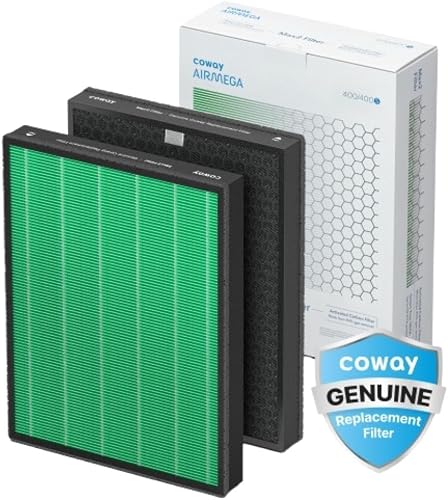
The Coway AirMega 400's Max2 filter integrates True HEPA and a substantial activated carbon layer in one combined filter. The carbon component is denser than what most standalone carbon pre-filters provide, which matters for persistent odor sources like pet bedding, cooking grease accumulation and VOC off-gassing from new furniture or paint.

Dual-sided air intake draws room air through the filter from multiple directions, which gives the carbon layer more contact time with odor molecules than a single-direction intake system. This improves odor adsorption efficiency in large rooms where odors originate from multiple source points.

The real-time LED air quality indicator provides immediate visual feedback when odor-associated particulate rises, which usually precedes detectable odor levels.

What buyers say

Buyers say Coway AirMega 400 delivers on its stated purpose without hidden trade-offs in the first several uses. The group most consistently satisfied is a premium living room, who say it handles their specific use case reliably. Where buyers recommend looking elsewhere is when budget is under $300.

Specifications

Specifications for Coway AirMega 400
CoverageUp to 1,748 sq ft
FilterMax2 combined HEPA and activated carbon
Air intake360-degree dual intake
Air quality indicatorReal-time LED display

Specs from Coway, AirMega 400 product page

04
Best WINIX premium for odors
WINIX WINIX 9800 WiFi Air Purifier

WINIX 9800 WiFi Air Purifier

Brand: WINIX

Best for

A dedicated home office, bedroom or dining room under 500 sq ft where persistent odors (cooking, tobacco, VOCs) need the combination of PlasmaWave molecular breakdown and HEPA filtration at WINIX's premium build quality.

Skip if

The room is larger than 500 sq ft. The WINIX 9800 covers 500 sq ft; for large-room odor control, the WINIX 5520 covers 1,882 sq ft at $134.99, which is less than half the price of the 9800.

The WINIX 9800 brings PlasmaWave molecular odor neutralization and activated carbon filtration to a medium-room format, with Matter smart home integration for full-platform compatibility. For a home office where chemical off-gassing from materials (desk, shelving, new electronics), printer VOCs or tobacco odors are ongoing, the 9800's combined filtration stack addresses the odor compounds alongside particulate filtration.

PlasmaWave operation is adjustable: it can run continuously, on a schedule or be disabled entirely for users who prefer ion-free operation. For odor control, running PlasmaWave continuously provides the best results.

What buyers say

Buyers point out that when the room is larger than 500 sq ft, a different product is the stronger fit. Outside that situation, WINIX 9800 WiFi Air Purifier gets straightforward positive feedback from people using it as intended. For a dedicated home office, the performance buyers report is consistently positive across the product's intended use.

Specifications

Specifications for WINIX 9800 WiFi Air Purifier
Coverage500 sq ft (2 ACH)
HEPA gradeTrue HEPA H13
PlasmaWaveYes (can be disabled)
Carbon filterActivated carbon
ConnectivityWi-Fi, Matter

Specs from WINIX, 9800 product page

Why HEPA alone does not control odors

This is the most common misunderstanding in air purifier marketing. HEPA filters are rated for particles: they capture 99.97% of particles at 0.3 microns. Odors are not particles. They are volatile organic compounds: gas-phase molecules that float freely through the HEPA fiber matrix without being captured.

A high-quality True HEPA purifier running in a room with strong cooking odors will not reduce those odors. The particles associated with cooking (smoke, grease aerosol) are captured; the odor compounds (aldehydes, fatty acids, aromatic compounds) pass through.

Activated carbon works differently. It has an enormous internal surface area created by its porous structure. Gas molecules contact this surface and bind to it through adsorption, which removes them from the air. An adequate activated carbon layer adsorbs cooking odors, pet VOCs, tobacco smoke odors and chemical off-gassing.

How much activated carbon is enough

Carbon filter effectiveness depends on the mass and density of activated carbon, not just its presence. Common configurations from least to most effective:

Thin carbon coating on a pre-filter: Common in budget purifiers. A thin carbon film on a foam pre-filter contains a few grams of carbon. This provides minimal odor adsorption and saturates quickly.

Carbon granule layer: A layer of loose or embedded carbon granules. More effective than a coating. Provides meaningful odor adsorption for light to moderate odor sources.

Dense activated carbon media: A thick, dense carbon layer or combined HEPA+carbon filter (like the Coway Max2). Provides the highest odor adsorption capacity and longest service life before saturation.

Carbon saturation means the carbon no longer adsorbs new odor molecules. A filter in a high-odor environment saturates faster than in a low-odor environment. When an air purifier that previously controlled odors stops doing so, the carbon layer has likely reached saturation and the filter needs replacement.

PlasmaWave and its role in odor control

PlasmaWave (WINIX technology) generates hydroxyl radicals, which are highly reactive molecules that break down volatile organic compounds at the molecular level. Unlike activated carbon, which adsorbs odor molecules until saturation, PlasmaWave actively destroys VOC molecules.

This distinction matters for persistent odor sources. Carbon adsorption is a storage mechanism: the odor compounds move from air to the carbon filter and remain there until the filter is replaced. PlasmaWave destroys the compounds, reducing the load on the carbon filter and extending its effective life.

For cooking odors and pet VOCs, running both the carbon filter and PlasmaWave simultaneously provides the most complete odor management.

Odor sources and which filtration addresses them

Odor source HEPA Carbon PlasmaWave
Cooking (smoke particles) Yes No Partial
Cooking (odor compounds) No Yes Yes
Pet dander Yes No No
Pet odor (ammonia) No Yes Yes
VOCs from furniture/paint No Yes Yes
Cigarette smoke (particles) Yes No No
Cigarette smoke (odor) No Yes Yes
Mold spores Yes No No

A purifier with HEPA, activated carbon and PlasmaWave (like the WINIX 5520) addresses all odor-related categories simultaneously.

Compare the picks

Side by side comparison of every pick
Specification
WINIX WINIX 5520 Air Purifier
WINIX 5520 Air Purifier
SwitchBot SwitchBot Air Purifier
SwitchBot Air Purifier
Coway Coway AirMega 400
Coway AirMega 400
WINIX WINIX 9800 WiFi Air Purifier
WINIX 9800 WiFi Air Purifier
Our verdictBest overall air purifier for odorsBest large coverage air purifier for odorsBest premium air purifier for odorsBest WINIX premium for odors
CoverageUp to 1,882 sq ftUp to 3,620 sq ftUp to 1,748 sq ft500 sq ft (2 ACH)
HEPA gradeTrue HEPA H13Not listedNot listedTrue HEPA H13
Carbon filterActivated carbon layerNot listedNot listedActivated carbon
PlasmaWaveHydroxyl radical VOC neutralizationNot listedNot listedYes (can be disabled)
ConnectivityWi-Fi, WINIX Smart appNot listedNot listedWi-Fi, Matter
FilterNot listedTrue HEPA + activated carbonMax2 combined HEPA and activated carbonNot listed
Smart integrationNot listedMatter, Alexa, Google Home, Apple HomeNot listedNot listed
PriceNot listed$89.99Not listedNot listed
Air intakeNot listedNot listed360-degree dual intakeNot listed
Air quality indicatorNot listedNot listedReal-time LED displayNot listed
BuyCheck priceCheck priceCheck priceCheck price

Questions people ask

Does an air purifier actually remove cooking odors?

Partially, depending on the activated carbon density. A purifier with a substantial activated carbon layer adsorbs volatile organic compounds from cooking: fats, proteins and aromatic compounds that create cooking smells. Models with only a thin carbon coating (a few grams of carbon) provide minimal odor adsorption. Models with dense activated carbon media (like the Coway Max2) adsorb more compounds before the carbon becomes saturated. For strong or persistent cooking odors, running the purifier at high fan speed during and immediately after cooking, combined with range hood ventilation, provides better results than relying on the purifier alone.

What is the difference between activated carbon and HEPA for odors?

HEPA filtration captures particles: dust, pollen, pet dander, mold spores. It does not capture gases or odor molecules, because odors are volatile compounds, not particles. Activated carbon uses a large internal surface area to adsorb (bind) gas-phase molecules including odor compounds, VOCs and ammonia. The two filtration methods are complementary: HEPA handles particles, carbon handles gases. A purifier marketed for odor control should include both; HEPA alone provides no odor removal.

Can PlasmaWave damage electronics or health?

PlasmaWave technology generates hydroxyl radicals at low concentration, which are the same naturally occurring radicals found in outdoor air. WINIX models with PlasmaWave have been reviewed by independent testing organizations and the ozone output is below EPA and CARB thresholds. However, some users prefer ion-free operation in enclosed rooms or near sensitive electronics. All WINIX models with PlasmaWave include a physical button or app setting to disable it independently from the HEPA filtration, so it is an optional feature rather than a required mode.