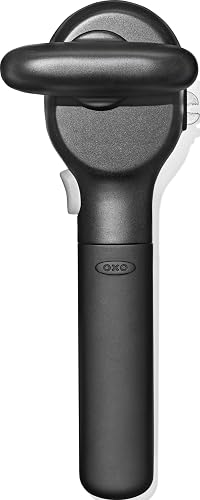
What is the difference between a smooth-edge and a standard can opener?
A standard (top-cutting) can opener cuts through the metal lid from the top, leaving the removed lid with a sharp circular edge and the can rim with a sharp inner edge. A smooth-edge (side-cutting) can opener cuts through the outer seam of the lid from the side, releasing the lid as a flat disc with smooth, rolled edges on both the lid and the can rim. The practical difference: a smooth-edge opener is safer to handle because neither the lid nor the can has a sharp cutting edge after opening. Standard top-cutting openers are faster and require less technique; the opener is placed on top of the can and operated conventionally. Smooth-edge openers require a slightly different positioning technique (the opener sits on the side of the can rim rather than the top) and may need two attempts to start the cut correctly. For households with children, for cooks who want to reuse lids, or where safety is a priority, smooth-edge openers are the better choice. For speed and simplicity, standard top-cutting openers work.
How long do manual can openers last?
A high-quality manual can opener lasts 5 to 10 years with regular home use. The primary failure point is the cutting wheel: the wheel's edge dulls with use, producing ragged cuts that require multiple passes around the can. A cutting wheel made from hardened stainless steel (OXO, Cuisinart) maintains its edge longer than a softer stainless or carbon steel wheel. The secondary failure point is the gear mechanism: the drive gear that advances the opener around the can rim can slip or strip, causing the opener to skip rather than advance smoothly. Signs that a can opener needs replacement: the cutting wheel produces a jagged lid edge rather than a clean cut, the gear slips during operation, or the handles are difficult to turn despite the can being standard gauge. A $15 to $25 can opener from OXO, Cuisinart or Kuhn Rikon is in the range where quality construction extends service life noticeably over very cheap can openers under $8.
Are electric can openers better than manual?
Electric can openers open cans with less physical effort than manual openers, which is a meaningful advantage for users with arthritis, weak hand grip or repetitive strain from opening many cans. For most home cooks who open a few cans per week, the manual OXO at $18 opens cans quickly with minimal effort and stores in a drawer. For users who open 10 or more cans at a time (batch cooking, canning season, large households), an electric opener reduces cumulative hand fatigue significantly. Electric openers trade convenience for size: they sit on the counter permanently and require outlet access. Manual openers trade counter space for storage flexibility: they store in a drawer or hang on a hook. The practical guide: if hand strength or repetitive strain is a concern, an electric opener is worth the counter space. If not, a manual opener at $12 to $18 performs equally well with less space required.