What is the difference between a burr grinder and a blade grinder?
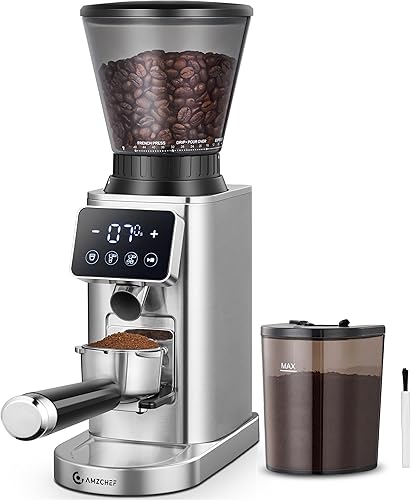
A burr grinder crushes coffee beans between two abrasive surfaces (burrs) set a fixed distance apart, producing a uniform particle size. A blade grinder chops beans with a spinning blade, producing particles of mixed sizes from powder-fine to large chunks. The difference in cup quality is significant: uniform particles from a burr grinder extract at the same rate, producing consistent flavor. Mixed particles from a blade grinder extract at different rates simultaneously: fine particles over-extract and turn bitter while large chunks under-extract and taste sour, and the cup tastes both bitter and weak at the same time. For any brewing method that relies on controlled extraction (pour-over, French press, espresso), a burr grinder produces better results than a blade grinder. Blade grinders work adequately for drip coffee makers where the paper filter catches most sediment and the brewing parameters are less sensitive.
How many grind settings do I need in a coffee grinder?
The number of grind settings needed depends on the brewing methods used. Single-method home coffee drinkers (drip only, or French press only) can work with as few as 5 to 10 settings if the correct setting for their method is in the range. Multi-method drinkers who switch between drip, pour-over and French press benefit from 15 to 40 settings because each method requires a different grind size and the more settings available, the finer the adjustment possible. More important than the total number of settings is whether the setting you need for your specific method is within the grinder's range: a 40-setting grinder that does not go coarse enough for French press is less useful than a 16-setting grinder that covers the full range from fine to coarse. For espresso, the number of settings matters less than whether the grinder can consistently produce particles in the 200 to 400 micron range required for espresso extraction.
How often should I clean a coffee grinder?
A burr coffee grinder should be cleaned every 2 to 4 weeks for daily home use. Coffee oil residue accumulates on the burrs and grounds pathway over time and becomes rancid, adding stale or bitter flavor to freshly ground coffee. To clean: unplug the grinder, remove the bean hopper and grounds bin, brush loose coffee from the burr surfaces using the cleaning brush included with most grinders (a stiff pastry brush works), wipe down the grounds bin and hopper with a dry cloth. Every 3 months, run a product like Grindz cleaning tablets through the grinder (follow package instructions) to dislodge oils and fine particle buildup from the burr chamber that a brush cannot reach. Avoid washing burr components with water: moisture causes metal corrosion on the burrs and swells any wooden components. A blade grinder can be quickly cleaned by grinding a small amount of plain white rice, which absorbs residual coffee oil.