Best colored pencils for art and drawing: top picks on Amazon

Colored pencils vary by core hardness, pigment concentration, lightfastness rating, blendability and whether the wax or oil-based binder determines layering behavior. Artist-grade pencils have higher pigment loads than student-grade sets and produce richer, more blendable color.

By Pickspry EditorialUpdated 4 picks


The short answer

Prismacolor Premier 72-Pencil Set at $35 is the best colored pencil set for most artists: the wax-based soft core blends smoothly with light pressure, the 72-color range covers the full spectrum plus skin tones and neutrals and the pigment concentration produces rich color in 2 to 3 layers without requiring heavy hand pressure.

Product buttons open Amazon search results. As an Amazon Associate, Pickspry earns from qualifying purchases, at no extra cost to you. Learn more

Quick picks

How we chose

Colored pencils are evaluated by binder type (wax vs oil), core hardness, pigment concentration, lightfastness ratings where published, pencil count per set, blendability and price. Specs from manufacturer product pages. We did not test these products.

The picks, in detail

4 picks reviewed
01
Best colored pencils for blending
Prismacolor Prismacolor Premier Colored Pencils 72-Pencil Set

Prismacolor Premier Colored Pencils 72-Pencil Set

Brand: Prismacolor

Best for

Artists who want colored pencils optimized for smooth layering and blending on paper or illustration board, where Prismacolor Premier's soft wax core blends under a blending stump or colorless blender pencil to produce smooth gradients.

Skip if

Maximum lightfastness for archival artwork is critical. Prismacolor Premier pencils have mixed lightfastness ratings; some colors fade faster than others under prolonged light exposure. For archival-quality work, Faber-Castell Polychromos has more consistently rated lightfastness across the color range.

Prismacolor Premier uses a thick, soft wax core that deposits rich color at low pressure and blends smoothly without requiring a blending solvent. The large core diameter resists breakage better than hard core pencils during sharpening and use.

The 72-color set covers the full spectrum, earth tones, warm and cool grays, skin tone gradations and metallic-effect colors. The wax bloom (a light haze that appears on completed areas over time) can be removed with a dry cloth or fixed with a workable fixative spray.

At $35 for 72 pencils, Prismacolor Premier provides 49 cents per pencil for the most widely used professional-level wax-core colored pencil set.

Specifications

Specifications for Prismacolor Premier Colored Pencils 72-Pencil Set
BinderWax-based
Core hardnessSoft
Pencil count72
Price$35

Specs from Prismacolor Premier, colored pencil set Amazon search

02
Best colored pencils for archival work
Faber-Castell Faber-Castell Polychromos Colored Pencils

Faber-Castell Polychromos Colored Pencils

Brand: Faber-Castell

Best for

Artists who need confirmed lightfastness ratings for artwork meant to be displayed long-term or sold, where Faber-Castell Polychromos uses an oil-based binder and publishes lightfastness ratings for every color in the range.

Skip if

Smooth blending with light pressure is the priority. Polychromos uses a harder oil-based core that requires more pressure to deposit the same color density as Prismacolor Premier's soft wax core. The result is more precise detail work but less smooth blending for gradient transitions.

Faber-Castell Polychromos uses an oil-based binder that resists wax bloom, does not require a fixative for long-term storage and provides more consistent behavior in hot and humid environments than wax-based cores. The harder core holds a sharper point longer, making it better suited for fine detail work.

Polychromos are available in 120 individual colors, allowing artists to expand a starter set selectively rather than buying a complete set. The color range is wider than most competitors at 120 colors.

At $50 for 36 pencils ($1.39 per pencil), Polychromos is the premium per-pencil cost option with the best archival performance in this guide.

Specifications

Specifications for Faber-Castell Polychromos Colored Pencils
BinderOil-based
Core hardnessMedium-hard
LightfastnessPublished for all colors
Price$50 (36-pencil set)

Specs from Faber-Castell Polychromos, colored pencils Amazon search

03
Best budget colored pencils
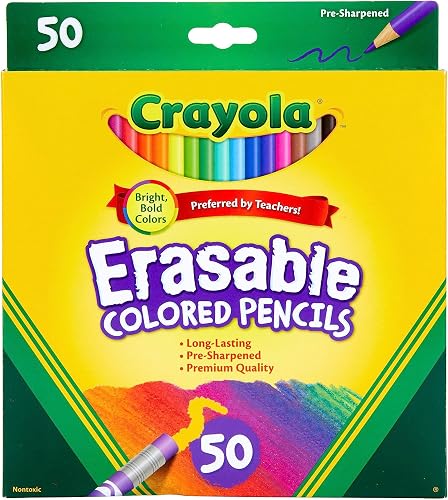
Crayola Crayola Colored Pencils 50-Count

Crayola Colored Pencils 50-Count

Brand: Crayola

Best for

Children, students and beginners who need a large color range for school projects, casual art exploration and general use where archival quality and blending performance are secondary to accessibility and cost.

Skip if

Adult artists or anyone developing serious colored pencil technique should look at Prismacolor Premier at $35 instead. Crayola colored pencils have a harder, drier core with lower pigment concentration that makes blending difficult and requires heavy pressure to achieve deep color saturation. The limitation becomes apparent when attempting fine art techniques.

Crayola colored pencils use a hard wax core with a lower pigment concentration than artist-grade pencils. The pencils produce clean, bright color for school work and casual drawing but do not layer or blend smoothly enough for portrait or illustration techniques that require graduated color transitions.

The 50-count set provides the full spectrum including skin tones, metallics and neutrals. The pencils are available without individual color names, which makes replacement of specific colors less straightforward.

At $10 for 50 pencils, Crayola provides 20 cents per pencil for a children's and school-grade colored pencil suitable for general non-professional use.

Specifications

Specifications for Crayola Colored Pencils 50-Count
BinderWax-based (student grade)
Core hardnessHard
Pencil count50
Price$10

Specs from Crayola, colored pencils Amazon search

04
Best soft-core colored pencils for texture
Derwent Derwent Coloursoft 36-Pencil Set

Derwent Coloursoft 36-Pencil Set

Brand: Derwent

Best for

Artists who want an alternative to Prismacolor with a distinctly soft, velvety core texture that produces a matte, painterly finish rather than the slightly waxy surface of Prismacolor, where Derwent Coloursoft offers comparable blending with a different surface feel.

Skip if

Fine detail work is the primary application. Derwent Coloursoft's very soft core makes maintaining sharp points difficult for fine detail work. For detailed illustration requiring sharp edges and fine lines, Faber-Castell Polychromos' harder core holds a point better under sustained detail work.

Derwent Coloursoft uses an ultra-soft wax core that produces a matte, velvety finish on paper rather than the slightly shiny surface that Prismacolor Premier's wax core creates when heavily layered. The softness allows color to be applied quickly and blended with minimal pressure.

The 36-color set is available as the introductory range; Derwent Coloursoft is available in 72 colors in the full range. The matte finish of Coloursoft holds subsequent layers without wax bloom.

At $45 for 36 pencils ($1.25 per pencil), Derwent Coloursoft is the premium per-pencil wax-core option for artists who prefer the matte surface over Prismacolor's finish.

Specifications

Specifications for Derwent Coloursoft 36-Pencil Set
BinderWax-based (soft)
Core hardnessVery soft
Pencil count36
Price$45

Specs from Derwent Coloursoft, colored pencil set Amazon search

Colored pencil comparison

Model Binder Core Count Price
Prismacolor Premier Wax Soft 72 $35
Faber-Castell Polychromos Oil Medium-hard 36 $50
Crayola Wax Hard 50 $10
Derwent Coloursoft Wax Very soft 36 $45

Compare the picks

Side by side comparison of every pick
Specification
Prismacolor Prismacolor Premier Colored Pencils 72-Pencil Set
Prismacolor Premier Colored Pencils 72-Pencil Set
Faber-Castell Faber-Castell Polychromos Colored Pencils
Faber-Castell Polychromos Colored Pencils
Crayola Crayola Colored Pencils 50-Count
Crayola Colored Pencils 50-Count
Derwent Derwent Coloursoft 36-Pencil Set
Derwent Coloursoft 36-Pencil Set
Our verdictBest colored pencils for blendingBest colored pencils for archival workBest budget colored pencilsBest soft-core colored pencils for texture
BinderWax-basedOil-basedWax-based (student grade)Wax-based (soft)
Core hardnessSoftMedium-hardHardVery soft
Pencil count72Not listed5036
Price$35$50 (36-pencil set)$10$45
LightfastnessNot listedPublished for all colorsNot listedNot listed
BuyCheck priceCheck priceCheck priceCheck price

Questions people ask

Wax vs oil colored pencils: which should I choose?

Wax-based colored pencils use a wax binder that deposits color smoothly and blends easily at low pressure. The wax core is typically softer, making blending and layering straightforward for beginners. The drawbacks of wax are wax bloom (a white haze that appears on finished areas), susceptibility to smearing in hot conditions, and inconsistent lightfastness across the color range. Oil-based colored pencils use an oil binder that is harder, holds a sharper point, resists wax bloom, has more consistent lightfastness ratings and performs better in humid or warm conditions. Oil-based pencils require more pressure to achieve the same color density as wax cores and are less forgiving for smooth blending. For most beginners and casual artists, wax is easier to learn. For professional and archival work, oil-based provides better long-term performance.

How do I blend colored pencils?

There are three main blending methods for colored pencils. Burnishing uses a colorless blender pencil or a light-colored pencil to press and merge the existing color layers, creating a smooth, polished surface. Solvent blending uses odorless mineral spirits or a colored pencil blending solution on a brush or cotton swab to liquify and blend the wax or oil binders, producing a paint-like smooth finish. Layering builds up color gradually with light pressure using the natural softness of the pencil core, without additional tools. Wax-based pencils like Prismacolor blend most effectively with burnishing and solvent methods. Oil-based pencils like Polychromos blend best through patient layering and solvent application.

What paper should I use for colored pencils?

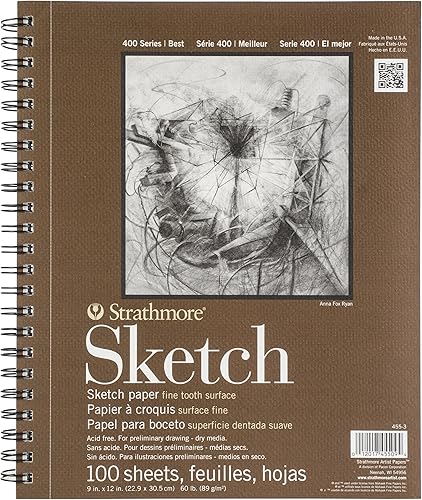
Colored pencils require a paper with enough tooth (texture) to grip the pigment particles. Smooth paper fills quickly and limits the number of layers that can be applied. For most colored pencil work, 70 to 90 lb (105 to 135 gsm) drawing paper with a medium tooth is appropriate. Strathmore 400 Series and Canson XL both work well. For heavy layering and burnishing techniques, 100 lb (150 gsm) or heavier paper resists wearing through and supports more layers. Pastel paper has an aggressive tooth that holds many layers but produces a rougher texture in the finished work. Avoid glossy paper, which does not hold colored pencil layers without special techniques.

  • Buying guide

    Best acrylic paint set for beginners and artists: top picks

    An acrylic paint set provides fast-drying, water-soluble paint that works on canvas, wood, paper and most surfaces. Pigment concentration, color count, tube size, whether the set is student or artist grade and lightfastness ratings determine the value of a set.

    4 picks · 5 sourcesUpdated September 28, 2026

  • Buying guide

    Best sketchbook for drawing and art: top picks on Amazon

    A sketchbook provides paper weight, tooth and size suited for a specific medium and use. Paper weight in pounds (lb) determines how well paper handles wet media without buckling, tooth determines how pencil and charcoal adhere, and paper acid content determines archival quality.

    4 picks · 5 sourcesUpdated September 28, 2026

  • Buying guide

    Best watercolor set for beginners and artists: top picks on Amazon

    A watercolor set provides transparent, water-soluble pigment in pan or tube form. Pigment quality, transparency rating, lightfastness, pan count, tube size and whether the set is student or artist grade determine how the paint performs on paper and how long finished artwork will last.

    4 picks · 5 sourcesUpdated September 28, 2026

  • Buying guide

    Best paint brushes for art and painting: top picks on Amazon

    Paint brushes vary by bristle material (natural vs synthetic), shape (round, flat, fan, filbert), size number and ferrule construction. The medium being used (watercolor, acrylic, oil) determines which bristle stiffness and shape combination produces the best results.

    4 picks · 5 sourcesUpdated September 28, 2026