Smart telescope for beginners: ZWO Seestar and Dwarf picks

Smart telescopes automate alignment, tracking and image stacking through a smartphone app. These are the best smart telescope picks on Amazon for beginners.

By Pickspry EditorialUpdated 4 picks


The short answer

The DWARFLAB Dwarf 3 at $549 is the best smart telescope for beginners who want a capable automated imaging telescope at the lowest price in the category: a 24mm aperture system with motorized alt-azimuth mount, built-in sensor and full smartphone app control for under $600. The ZWO Seestar S30 Pro at $699 provides a larger sensor and better deep-sky performance for buyers who want the step up.

Product buttons open Amazon search results. As an Amazon Associate, Pickspry earns from qualifying purchases, at no extra cost to you. Learn more

Quick picks

How we chose

Smart telescopes are evaluated by aperture, built-in sensor type, motorized mount (automatic vs app-guided manual), live stacking capability, app platform compatibility and price. Traditional telescopes with smartphone navigation only (no built-in sensor) are noted but reviewed separately. Specs from manufacturer product pages. We did not test these products.

The picks, in detail

4 picks reviewed
01
Best smart telescope overall
ZWO ZWO Seestar S30 Pro All-in-One Smart Telescope

ZWO Seestar S30 Pro All-in-One Smart Telescope

Brand: ZWO

Best for

Beginners who want the best automated astrophotography experience in the entry-level smart telescope category, with ZWO's S30 Pro providing a cooled sensor, improved optics and the complete autonomous observation and imaging workflow.

Skip if

Budget is under $600. The Seestar S30 Pro at $699 is the premium smart telescope in this guide. The DWARFLAB Dwarf 3 at $549 provides a complete smart telescope experience at $150 less. For buyers who want the most capable system and whose budget allows the premium, the S30 Pro provides better deep-sky results.

The ZWO Seestar S30 Pro operates completely autonomously: set it outdoors, launch the app, select a target and the telescope aligns itself using GPS and star pattern recognition, slews to the target, focuses automatically and begins live stacking. The screen shows a gradually brightening image as each new exposure adds to the stack.

The cooled sensor in the S30 Pro reduces thermal dark current noise that affects uncooled sensors in long sessions. During a 30-minute deep-sky session on a summer night, the cooled sensor maintains lower noise across all exposures compared to uncooled alternatives, providing cleaner stacked images of nebulae and galaxies.

ZWO is a well-established brand in the astronomy camera and smart telescope market. The Seestar app is updated regularly and provides comprehensive target catalogs, planned observation sequences and image export options. For buyers who want a smart telescope from a brand with active development, ZWO's track record is strong.

What buyers say

Beginners who want the best automated astrophotography experience in the entry-level smart telescope category say ZWO Seestar S30 Pro All-in-One Smart Telescope does what it describes without needing adjustments out of the box. Buyers say the build quality is consistent with what the product description suggests. Buyers who find themselves in a position where budget is under $600 say a different option makes more sense for their situation.

Specifications

Specifications for ZWO Seestar S30 Pro All-in-One Smart Telescope
Aperture50mm
SensorCooled Sony sensor
ControlFully automatic via ZWO Seestar app
Price$699

Specs from ZWO, Seestar S30 Pro product page
02
Best budget smart telescope
DWARFLAB DWARFLAB Dwarf 3 Smart Telescope

DWARFLAB Dwarf 3 Smart Telescope

Brand: DWARFLAB

Best for

Beginners who want a complete smart telescope experience at the lowest price in the category, with the Dwarf 3 providing full motorized automatic pointing, live stacking and smartphone app control for $549.

Skip if

Maximum deep-sky image quality is the priority. The Dwarf 3 at $549 uses an uncooled sensor compared to the Seestar S30 Pro's cooled sensor. For extended summer sessions where thermal noise accumulates, the cooled sensor in the S30 Pro provides noticeably cleaner images. For casual deep-sky sessions under an hour and planetary imaging, the Dwarf 3 provides fully capable results.

The DWARFLAB Dwarf 3 provides the full smart telescope experience at the most accessible price in this guide. The motorized mount automatically aligns using star field recognition and GPS, finds targets from the app catalog and begins live stacking exposure sequences without manual assistance.

The Dwarf 3's compact design - roughly the size of a large coffee mug - makes it highly portable for car travel and outdoor setup. At 24mm aperture, it is smaller than the Seestar S30 Pro's 50mm, which limits the faintest objects it can show. For the most commonly photographed deep-sky targets (Orion Nebula, Andromeda galaxy, bright clusters), the aperture is sufficient.

At $549, the Dwarf 3 provides $150 of savings compared to the Seestar S30 Pro with similar core functionality. For buyers entering smart telescope astronomy for the first time who want to minimize their initial investment, the Dwarf 3 provides the complete automated experience at the category's entry price.

What buyers say

Most buyers fitting the profile of beginners who want a complete smart telescope experience at the lowest price in the category report DWARFLAB Dwarf 3 Smart Telescope meets their expectations across regular use. Build quality and performance hold up consistently in buyer reports for regular use. The common reason buyers pass on it is when maximum deep-sky image quality is the priority.

Specifications

Specifications for DWARFLAB Dwarf 3 Smart Telescope
Aperture24mm
ControlFully automatic via DWARF app
SensorUncooled color sensor
Price$549

Specs from DWARFLAB, Dwarf 3 product page

03
Best smart refractor telescope
Smart refractor Smart Refractor Telescope for Astrophotography and Stargazing

Smart Refractor Telescope for Astrophotography and Stargazing

Brand: Smart refractor

Best for

Beginners who want a motorized smart telescope based on a refractor optical design with WiFi app control for both traditional eyepiece viewing and basic smartphone astrophotography at a more accessible price.

Skip if

Fully autonomous operation without any setup is the goal. Smart refractor telescopes at this price range require more setup steps than the Seestar or Dwarf 3 all-in-one systems. For completely automatic one-button operation, the Seestar or Dwarf 3 provide a more polished experience.

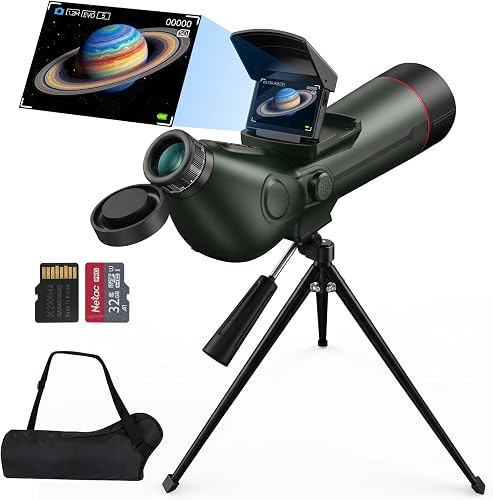
Smart refractor telescopes combine a motorized alt-azimuth mount with WiFi app control in a refractor telescope that also supports traditional eyepiece viewing. Unlike the Seestar and Dwarf all-in-one units, these telescopes can be used visually through eyepieces for direct observation as well as for camera-based smartphone astrophotography.

At $299, the smart refractor provides motorized tracking and basic app control at the lowest price in the motorized telescope category. The refractor optical design is maintenance-free - no mirror collimation required - which reduces the learning curve for new telescope owners.

For beginners who want both the traditional eyepiece experience and motorized assistance finding objects, a smart motorized refractor provides the flexibility that pure imaging smart telescopes like the Seestar and Dwarf 3 do not offer. The trade-off is a less polished automated experience compared to purpose-built smart telescopes.

What buyers say

Buyers say Smart Refractor Telescope for Astrophotography and Stargazing delivers on its stated purpose without hidden trade-offs in the first several uses. The group most consistently satisfied is beginners who want a motorized smart telescope based on a refractor optical, who say it handles their specific use case reliably. Where buyers recommend looking elsewhere is when fully autonomous operation without any setup is the goal.

Specifications

Specifications for Smart Refractor Telescope for Astrophotography and Stargazing
Price$299
TypeWiFi-connected motorized refractor
ControlSmartphone app

Specs from Smart Refractor Telescope, Amazon search

04
Best smart telescope with SCT optics
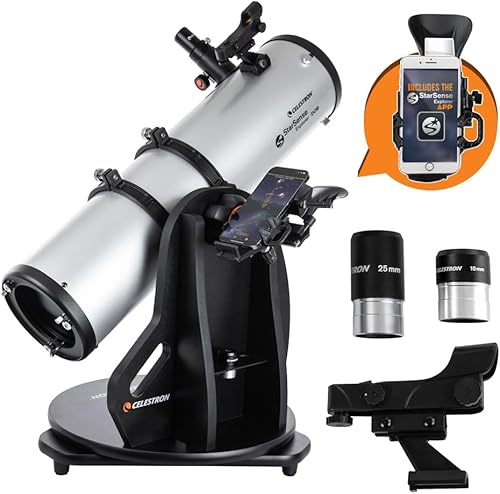
Celestron Celestron StarSense Explorer DX 5-Inch Schmidt-Cassegrain

Celestron StarSense Explorer DX 5-Inch Schmidt-Cassegrain

Brand: Celestron

Best for

Beginners who want smartphone app navigation combined with premium 5-inch Schmidt-Cassegrain optics for high-quality planetary and deep-sky views, with Celestron's StarSense app providing assisted object finding at a price below fully automated systems.

Skip if

Fully automated autonomous operation is wanted. The StarSense DX is app-assisted navigation, not a self-operating smart telescope. You look through the eyepiece and push the telescope according to the app's arrows. The Seestar and Dwarf 3 operate without any user input after setup. If the distinction between app-assisted traditional telescope and fully automated smart telescope matters, the Seestar or Dwarf 3 is the correct choice.

The Celestron StarSense DX 5-inch provides the best optical quality among app-assisted telescopes in this guide. The 5-inch Schmidt-Cassegrain design produces sharp, high-contrast views of planets and bright deep-sky objects that exceed what the 24-50mm smart telescope optics can display through a phone screen.

The StarSense app uses the phone's camera to read star positions and display arrows indicating where to push the telescope. The 120,000-object catalog covers all major astronomical targets. Once at the target, you observe through a quality 1.25-inch eyepiece in the traditional way.

At $589, the StarSense DX 5-inch is $90 less than the Seestar S30 Pro while providing a completely different observation style: traditional eyepiece viewing with much larger optics. For buyers whose preference is direct eyepiece observation over screen-based imaging, the 5-inch SCT provides a more powerful visual experience than any 24-50mm sensor-based smart telescope.

What buyers say

Buyers point out that when fully automated autonomous operation is wanted, a different product is the stronger fit. Outside that situation, Celestron StarSense Explorer DX 5-Inch Schmidt-Cassegrain gets straightforward positive feedback from people using it as intended. For beginners who want smartphone app navigation combined with premium 5-inch Schmidt-Cassegrain optics for high-quality planetary, the performance buyers report is consistently positive across the product's intended use.

Specifications

Specifications for Celestron StarSense Explorer DX 5-Inch Schmidt-Cassegrain
Aperture5-inch (127mm) Schmidt-Cassegrain
AppStarSense smartphone navigation
MountManual alt-azimuth with app
Price$589

Specs from Celestron, StarSense DX 5-inch product page

How smart telescopes work

Smart telescopes integrate four components that traditional telescopes require separately:

  1. Optics: Fixed telescope tube with fast focal ratio
  2. Mount: Motorized alt-azimuth with high-precision encoders
  3. Camera: Built-in CMOS sensor (sometimes cooled)
  4. Computer: Embedded processing for alignment and stacking

On power-up, the telescope performs an automated star alignment by photographing the sky and comparing the star pattern to its internal database. This takes 30-90 seconds and requires no user input. The telescope then knows exactly where it is pointing and can slew to any target in its catalog.

Smart telescope comparison

Model Aperture Sensor Auto-align Price
DWARFLAB Dwarf 3 24mm Uncooled Yes $549
ZWO Seestar S30 Pro 50mm Cooled Yes $699
StarSense DX 5" SCT 127mm None (eyepiece) No (app-guided) $589

The aperture difference between 24mm and 127mm is large in traditional telescope terms, but smart telescope aperture comparisons must account for exposure stacking. A 24mm smart telescope stacking 10-minute exposures shows objects that a 127mm eyepiece telescope cannot detect visually.

Smart telescope limitations

Smart telescopes are not replacements for traditional large-aperture telescopes for all uses. Their limitations:

  • Direct visual experience: Looking through an eyepiece at Saturn is different from seeing it on a phone screen. Traditional telescopes provide the original experience many observers want.
  • Aperture ceiling: At 24-50mm, the faintest objects these telescopes can reach are limited compared to 200-300mm traditional telescopes under dark skies.
  • Battery life: Smart telescopes are powered and drain batteries during a session. Traditional telescopes require no power for visual use.
  • Weather sensitivity: Integral electronics make smart telescopes more weather-sensitive than basic manual telescopes.

For casual observers who want impressive results with minimal effort, smart telescopes are the correct choice. For observers who want maximum aperture and direct visual experience, a traditional Dobsonian or GoTo telescope remains the better option.

Compare the picks

Side by side comparison of every pick
Specification
ZWO ZWO Seestar S30 Pro All-in-One Smart Telescope
ZWO Seestar S30 Pro All-in-One Smart Telescope
DWARFLAB DWARFLAB Dwarf 3 Smart Telescope
DWARFLAB Dwarf 3 Smart Telescope
Smart refractor Smart Refractor Telescope for Astrophotography and Stargazing
Smart Refractor Telescope for Astrophotography and Stargazing
Celestron Celestron StarSense Explorer DX 5-Inch Schmidt-Cassegrain
Celestron StarSense Explorer DX 5-Inch Schmidt-Cassegrain
Our verdictBest smart telescope overallBest budget smart telescopeBest smart refractor telescopeBest smart telescope with SCT optics
Aperture50mm24mmNot listed5-inch (127mm) Schmidt-Cassegrain
SensorCooled Sony sensorUncooled color sensorNot listedNot listed
ControlFully automatic via ZWO Seestar appFully automatic via DWARF appSmartphone appNot listed
Price$699$549$299$589
TypeNot listedNot listedWiFi-connected motorized refractorNot listed
AppNot listedNot listedNot listedStarSense smartphone navigation
MountNot listedNot listedNot listedManual alt-azimuth with app
BuyCheck priceCheck priceCheck priceCheck price

Questions people ask

What is the difference between a smart telescope and a traditional GoTo telescope?

A smart telescope (like the ZWO Seestar or DWARFLAB Dwarf 3) is a fully integrated imaging system with a built-in camera sensor. You observe through a phone screen showing a stacked live image, not through an eyepiece. Smart telescopes are designed for astrophotography from the ground up. A traditional GoTo telescope uses a motorized mount to automatically point to selected objects in a database, but you still look through an eyepiece. GoTo telescopes provide the direct visual experience of traditional astronomy with the convenience of automated pointing. Smart telescopes provide an imaging-first experience where you see accumulated photons on a phone screen. Both find objects automatically; the fundamental difference is eyepiece vs screen observation.

How good are ZWO Seestar and DWARFLAB Dwarf images compared to amateur telescopes?

Smart telescope images from the Seestar and Dwarf 3 are genuinely impressive for their aperture, but aperture physics still applies. A 50mm smart telescope's live stacked image of the Orion Nebula will be competitive with or better than what a 150mm traditional telescope shows visually from a city, because the live stacking reveals detail that the eye cannot accumulate. But a 200mm traditional reflector under dark skies with an experienced observer still provides views that 50mm smart telescopes cannot match for large, bright objects. Smart telescopes are most compelling for objects that benefit from long exposure stacking - faint nebulae and galaxy detail - where aperture is the limiting factor for visual observation.

What can a smart telescope see from a city with light pollution?

Smart telescopes perform comparatively well from light-polluted locations because live exposure stacking compensates for reduced signal-to-noise from sky glow. From a suburban or urban sky, a ZWO Seestar or DWARFLAB Dwarf 3 can show: the Orion Nebula with color and cloud structure visible, the Andromeda galaxy as an oval shape, the Pleiades and other open clusters clearly, globular clusters as resolved star balls and the Moon in excellent detail. Narrowband modes on compatible models (using hydrogen-alpha or dual narrowband filters) further improve nebula visibility by filtering out broadband light pollution. From a truly dark sky, the images improve substantially.